Ayşenur Taştemel — Interior Architect - Corporate Marketing Manager
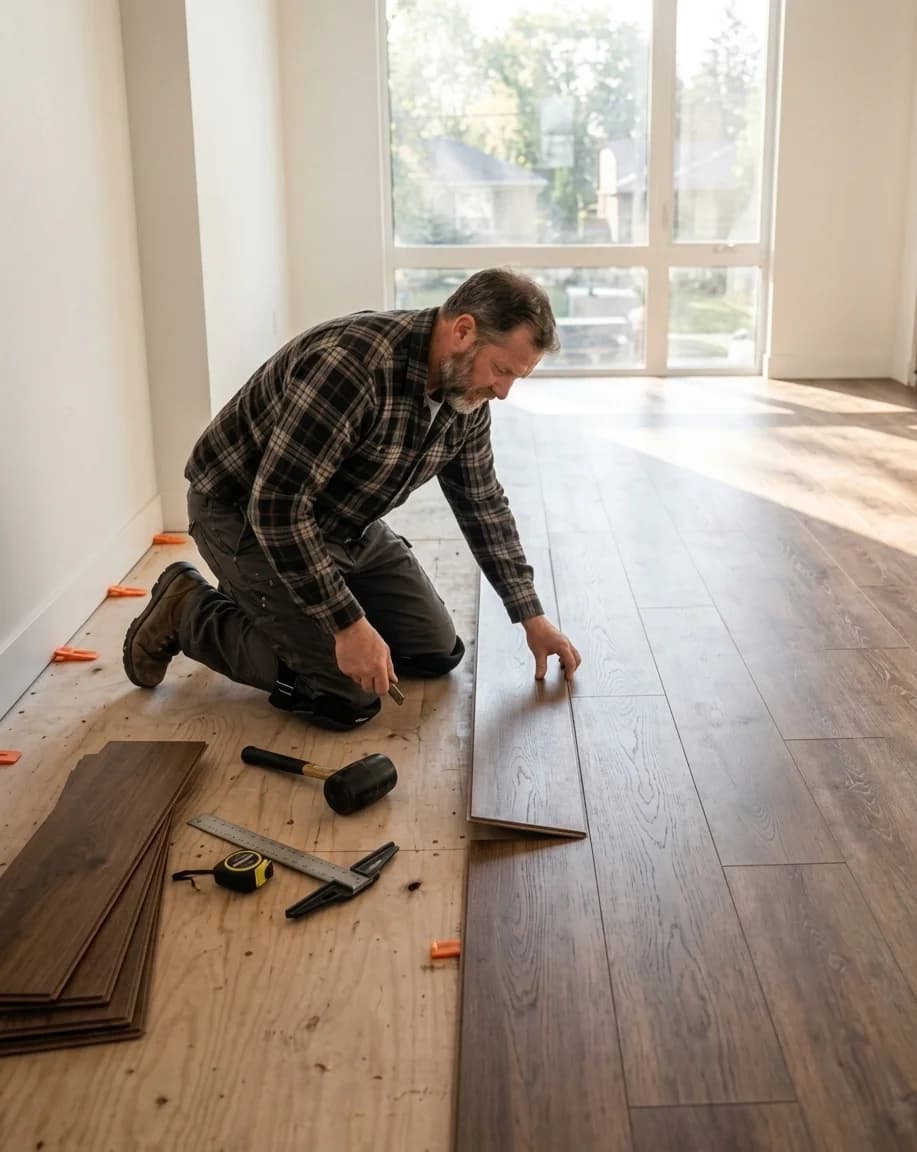
Thickness is usually the first spec buyers ask about when comparing SPC flooring: 4+1 mm, 5+1 mm or 6+1 mm? The common answer — "thicker is better" — is only half right. Thickness changes how a floor feels underfoot, how much it weighs and how high it sits. How well it stands up to years of foot traffic is decided by something else: the wear layer.
This guide compares the thickness options of Porfloor SPC flooring using real product data, and shows which combination suits which space — whether you are choosing a floor for your own home or specifying a project.
What Does "4+1 mm" Mean?
SPC flooring thickness is written as two numbers:
- The first number (4, 5 or 6 mm) is the rigid Stone Plastic Composite core, made from limestone powder and PVC. It gives the plank its strength and makes it waterproof.
- "+1 mm" is a 1 mm IXPE underlay bonded to the back of the plank at the factory. It reduces impact and footstep noise and evens out minor subfloor imperfections.
So a 4+1 mm plank is about 5 mm thick in total, and a 6+1 mm plank about 7 mm. According to Porfloor's technical data sheet, the 1 mm IXPE underlay achieves STC 52 and IIC 55 acoustic ratings. Because the underlay is already attached, you don't need a separate one — and adding a thick extra underlay on top can put strain on the click-lock joints.
Which Thicknesses Does Porfloor Offer?
- Wood-look SPC flooring: 4+1, 5+1 and 6+1 mm
- Stone-look SPC flooring: 4+1 and 5+1 mm
- Custom thicknesses: available on request for projects
The wear layer is offered at 0.15 mm, 0.30 mm and 0.55 mm. Thickness and wear layer are two separate specifications, so always ask about both when requesting a quote.
The Numbers: 4+1 vs 5+1 vs 6+1 mm
The figures below come from Porfloor's packaging data for wood-look SPC planks in the 180×1220 mm format:
| Thickness | Planks per box | m² per box | Box weight | Approx. weight per m² | Full container (approx.) |
|---|---|---|---|---|---|
| 4+1 mm | 10 | 2.196 m² | 18.91 kg | 8.6 kg/m² | 2,778 m² |
| 5+1 mm | 8 | 1.757 m² | 19.00 kg | 10.8 kg/m² | 2,126 m² |
| 6+1 mm | 7 | 1.537 m² | 19.85 kg | 12.9 kg/m² | 1,775 m² |
Two practical takeaways:
- 6+1 mm is roughly 50% heavier per square metre than 4+1 mm. Plan handling, carrying to upper floors and storage accordingly.
- A container holds about 56% more square metres of 4+1 mm than 6+1 mm. For importers, distributors and large projects, thickness has a direct effect on freight cost per square metre.
What Thickness Changes
Feel underfoot. A thicker plank is more rigid and feels fuller and more solid to walk on. The difference is most noticeable across large, open-plan rooms.
Tolerance to minor subfloor irregularities. A rigid plank makes tiny undulations less noticeable underfoot. It is not a substitute for preparation, though: Porfloor's installation guide requires the subfloor to be flat within 2 mm over 2 metres for every thickness. Level the floor first with a self-levelling compound if needed.
Installed height. The finished floor adds 5, 6 or 7 mm. In new builds that barely matters; in renovations over an existing floor, every millimetre counts at door clearances, thresholds and under kitchen units.
Weight and cost. More thickness means more material, more weight and higher freight cost per square metre.
What Thickness Doesn't Change
Waterproofing. The SPC core contains no wood fibre, so a 4+1 mm plank is just as waterproof as a 6+1 mm one.
Underfloor heating compatibility. Every thickness can be used over underfloor heating. Porfloor's technical data sheet gives a thermal resistance of 0.0165 m²K/W for 4 and 5 mm planks — far too low to hold heat back. The rule is the same for all thicknesses: keep the surface temperature at or below 28 °C. See our SPC flooring and underfloor heating guide for details.
Wear resistance. That is decided by the wear layer, covered in the next section.
What Really Drives Durability: The Wear Layer
The wear layer is the clear protective film over the printed design. It determines how well your floor resists wear over the years. Here is the abrasion resistance from Porfloor's technical data sheet (ISO 24338) and the warranty periods from Porfloor's warranty terms:
| Wear layer | Abrasion resistance | Residential warranty | Light commercial warranty |
|---|---|---|---|
| 0.15 mm | ≥ 600 revolutions | 7 years | Not covered |
| 0.30 mm | ≥ 2,000 revolutions | 15 years | 7 years |
| 0.55 mm | ≥ 4,000 revolutions | 25 years | 10 years |
Light commercial use covers low-traffic spaces such as offices, small shops and boutique businesses. Commercial areas with heavy foot traffic are excluded from the warranty.
The bottom line: if you have pets or young children, or you want the floor to last for many years, upgrade the wear layer first and think about thickness second. On the data sheet figures, a 0.55 mm wear layer offers roughly 6.5 times the abrasion resistance of 0.15 mm (≥ 4,000 versus ≥ 600 revolutions).
Which Combination for Which Space?
| Space | Recommended thickness | Recommended wear layer |
|---|---|---|
| Bedroom, home office | 4+1 or 5+1 mm | 0.15–0.30 mm |
| Rental property, quick refurbishment | 4+1 mm | 0.30 mm |
| Living room, hallway, kitchen | 5+1 mm | 0.30 mm |
| Homes with children and pets | 5+1 mm | 0.55 mm |
| Large open-plan spaces | 6+1 mm (wood-look) | 0.30–0.55 mm |
| Office, boutique shop (light commercial) | 5+1 or 6+1 mm | 0.55 mm (0.30 mm minimum) |
Avoid a 0.15 mm wear layer in any light commercial space: it wears faster and is not covered by the warranty. To check availability of a specific thickness and wear layer combination, get in touch with our team.
Renovating Over an Existing Floor?
SPC can be installed over existing ceramic tiles; Porfloor's installation guide requires the tiles to be prepared with primer and levelling compound. In this kind of renovation 4+1 mm has a clear advantage: the lower build-up height reduces the need to trim doors or replace thresholds. For the full process, read our guide to installing SPC over an existing floor.
Pre-Order Checklist
- Have you confirmed both the thickness and the wear layer?
- Does the wear layer match how heavily the space will be used?
- For renovations, have you measured door clearances and threshold heights?
- Have you confirmed the underlay is pre-attached, so no separate underlay is needed?
- Have you added 8–10% to the area for cutting waste?
- Are all boxes from the same lot number?
The last two points come from Porfloor's installation guide and apply to every order, whatever the thickness.
Frequently Asked Questions
What does 4+1 mm mean on SPC flooring? The first number is the thickness of the rigid SPC core; the "+1" is a 1 mm IXPE underlay bonded to the back of each plank at the factory. A 4+1 mm plank is about 5 mm thick in total, and because the underlay is pre-attached, no separate underlay is needed.
What thickness of SPC flooring is best for a home? For most homes, 5+1 mm is a well-balanced choice. 4+1 mm works well in bedrooms, rental properties and renovations over an existing floor. 6+1 mm suits large open-plan spaces and anyone who wants a more solid feel underfoot.
Is thicker SPC flooring more durable? Resistance to wear and scuffing is determined by the transparent wear layer on top, not by plank thickness. Porfloor SPC flooring is offered with 0.15, 0.30 and 0.55 mm wear layers, and the warranty period is based on the wear layer.
How long is the warranty on SPC flooring? Under Porfloor's warranty terms, residential use is covered for 7 years with a 0.15 mm wear layer, 15 years with 0.30 mm and 25 years with 0.55 mm. Light commercial use is covered for 7 years with 0.30 mm and 10 years with 0.55 mm; the 0.15 mm wear layer is not covered for light commercial use.
Will thicker SPC flooring hide an uneven subfloor? No. A thicker, more rigid plank makes very small irregularities less noticeable underfoot, but it does not replace subfloor preparation. Porfloor's installation guide requires the subfloor to be flat within 2 mm over 2 metres for every thickness.
Which SPC thickness is best over underfloor heating? All Porfloor SPC thicknesses can be used over underfloor heating, provided the surface temperature stays at or below 28 °C. The technical data sheet lists a thermal resistance of 0.0165 m²K/W for 4 and 5 mm planks, which is far too low to hold heat back.
The Bottom Line
Three questions settle the thickness choice: Is it new build or renovation? How heavily will the space be used? What should the floor feel like underfoot? For most homes, 5+1 mm with a 0.30 mm wear layer is a safe starting point. If durability is the priority, upgrade the wear layer first.
Browse our wood-look SPC flooring and stone-look SPC flooring collections, download our catalogue, or contact us to agree the right thickness and wear layer for your project. Wondering how SPC compares with other floors? Read our SPC vs. laminate comparison.