Ayşenur Taştemel — Interior Architect - Corporate Marketing Manager
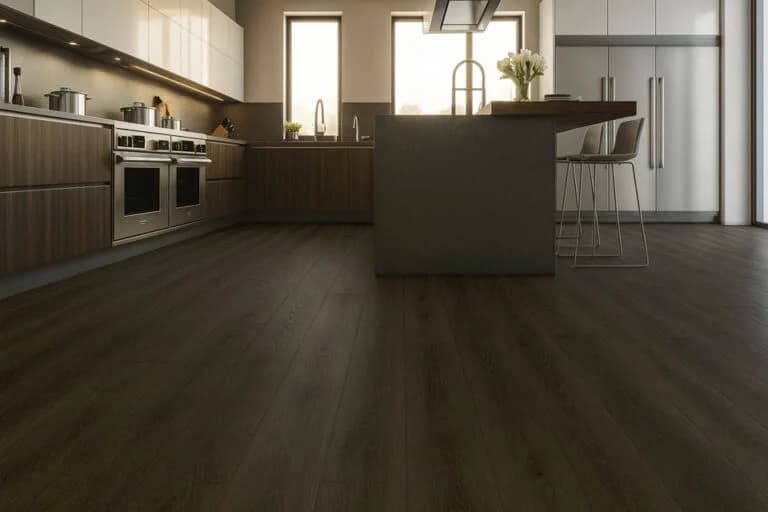
If you've started shopping for new flooring, you've likely come across two look-alike products that couldn't be more different underneath the surface: SPC flooring and laminate flooring. Both mimic the warmth of wood or the elegance of stone, and both are far more budget-friendly than the real thing. But once you get past the surface layer, the two products diverge sharply — and picking the wrong one for your space can mean a floor that warps, swells, or wears out years before it should.
What Is SPC Flooring?
SPC stands for Stone Plastic Composite. Its core is made from limestone powder combined with stabilizers and PVC, compressed into a dense, rigid board. A high-resolution printed layer gives it the appearance of natural wood or stone, and a clear wear layer protects that print from scuffs and fading. Because the core is rigid and 100% synthetic, SPC flooring doesn't contain any wood fiber at all.
What Is Laminate Flooring?
Laminate flooring is built around a core of high-density fiberboard (HDF), which is a compressed wood product. A photographic layer sits on top of the core, sealed under a resin-based wear layer, with a backing layer underneath to balance the board and resist moisture from below — though only to a limited degree.
Durability and Wear Resistance
Both products hold up well to everyday foot traffic, pets, and furniture, but they fail differently under stress:
- SPC resists dents and impacts thanks to its rigid stone-composite core, and its wear layer is typically rated for both residential and light commercial use.
- Laminate can dent under heavy point loads (think stiletto heels or furniture legs without pads) because its wood-fiber core is softer than stone composite.
Water and Moisture Resistance
This is where the two products really part ways. SPC's core contains no wood fiber, so it doesn't swell or delaminate when it gets wet — many SPC products are fully waterproof and safe for kitchens, bathrooms, and basements. Laminate's HDF core is wood-based; even "water-resistant" laminate can swell at the seams if water sits on it for too long, which rules it out for consistently wet rooms.
Sound and Comfort Underfoot
Underfoot feel matters more than most buyers expect until they're standing on it. SPC's dense, rigid core transmits less flex than laminate, which some homeowners prefer for a solid, substantial feel — but that same rigidity can make it feel and sound firmer, especially on upper floors or over concrete. Laminate's HDF core has slightly more give, and its foam or cork underlayment — often required for both products — helps absorb impact sound. If acoustic comfort in a second-floor room is a priority, ask about Impact Insulation Class (IIC) ratings and pair either product with a quality underlayment; SPC in particular benefits from an attached or separate acoustic pad to reduce the hollow "click-floor" sound that rigid-core products are sometimes known for.
Installation
Both products commonly use a click-lock system that installs over most existing subfloors without glue or nails, making either a reasonable DIY project with basic tools. SPC boards tend to be slightly heavier and more rigid, which some installers find easier to work with on uneven subfloors, since the boards don't telegraph small imperfections the way thinner laminate can. Laminate, being lighter, is easier to carry and cut for solo DIYers working on a tight timeline.
Cost Considerations
Laminate flooring is generally the more budget-friendly option upfront, largely because HDF is cheaper to produce than a stone-composite core. SPC flooring typically carries a higher material cost, but that gap narrows — or reverses — once you factor in total cost of ownership. A laminate floor damaged by water in a kitchen or bathroom often needs to be replaced entirely, while a waterproof SPC floor in the same room can last well over a decade without a moisture-related failure. For budget-driven projects in dry rooms, laminate can be the right call. For rooms where a single leak could mean a full floor replacement, SPC's higher upfront cost is usually the cheaper choice over time.
Environmental Impact
Both products have improved significantly on sustainability in recent years, but they start from different raw materials. Laminate's HDF core uses wood fiber, so sourcing from certified forests matters if sustainability is a priority — always check the certification on the specific product, not just the category. SPC flooring's mineral-and-polymer core doesn't consume wood fiber directly, and because it's 100% synthetic, high-quality SPC — including Porfloor's — is fully recyclable at the end of its service life. Porfloor manufactures its SPC flooring using PEFC-certified materials and production practices that include solar power and rainwater reclamation, which is worth asking about if environmental impact factors into your decision.
Comparison at a Glance
| SPC Flooring | Laminate Flooring | |
|---|---|---|
| Core material | Stone plastic composite | Wood fiberboard (HDF) |
| Waterproof | Yes, fully | Water-resistant at best |
| Best rooms | Kitchens, bathrooms, basements | Living rooms, bedrooms |
| Feel underfoot | Firm, dense | Slightly warmer, softer |
| Typical lifespan | 15–25 years | 10–20 years |
Common Questions
Can I install SPC or laminate over radiant floor heating? Many SPC products are rated for use over radiant heat, but always confirm the manufacturer's maximum surface temperature — laminate is generally more heat-sensitive and can warp if the system runs too hot.
Will either option work in a rental property? Both click-lock systems are floating floors, meaning they aren't glued down and can, in principle, be removed — though SPC's added weight makes it a slightly more permanent-feeling installation.
Does either flooring type fade in direct sunlight? Both use a UV-protective wear layer, but consistent, intense direct sun over years can dull any printed floor; window coverings or UV-filtering glass help either product hold its color longer.
Which One Should You Choose?
Think about the room first, then the budget. Bathrooms, kitchens, mudrooms, and basements are non-negotiable territory for waterproof flooring — that's SPC's home turf. Bedrooms, home offices, and formal living rooms rarely see standing water, which is where laminate's lower cost and slightly softer feel can make sense. If you're flooring an open-plan space that includes both a kitchen and a living area, many homeowners simply run SPC throughout for a seamless look and one less material to maintain.
Porfloor's SPC flooring collections combine wood and stone visuals with a fully waterproof, dent-resistant core, backed by CE, TSE, and ISO certification. Browse our SPC flooring collections to find the pattern that fits your space.